
Retzei B’Menuchaseinu – Cantor Yaakov Motzen – Martin Meir Widerker
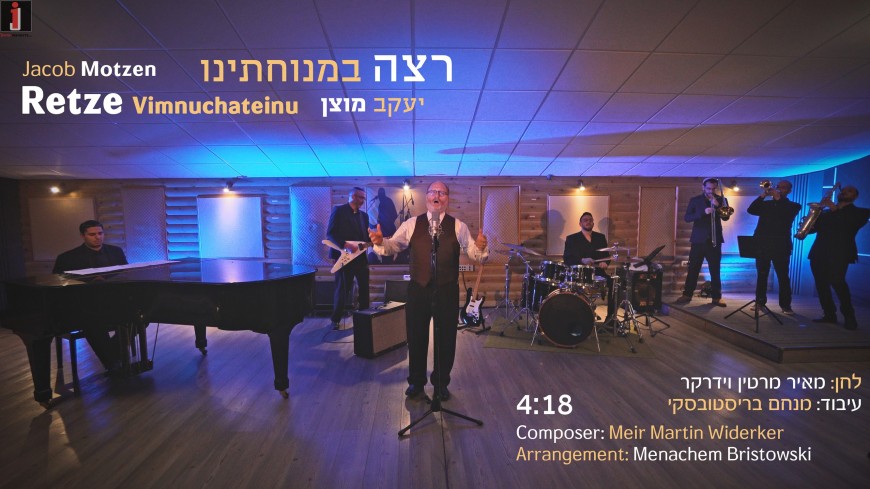
Cantor Yaakov Motzei performs this incredible special melody composed by Meir Martin Widerker. This song, Ritzei, is featured from the upcoming 4th album in the series of Shabbos songs. The rhythmic melody expresses the atmosphere of Shabbos Menuacha interpreted in his unique and inspirational way.
About the Lyrics:
The way in which a Yid is able to have Menucha, and Kadusha, is by connecting to Hakadsh Baruch Hu. How do we connect? Through His Mitzvos.
The word Mitzvah doesn’t mean simply a commandment, as it’s commonly thought, it means a connection. When we do a Mitzvah, it allows to tap into our Chelek Elokei.
Though this action, we allow our soul to reach Simcha! How do we reach that level of Simcha? Vetahar Libeinu, Leavdecha Bemes.
By serving Hashem with true honesty (Emes) we reach the highest connections imaginable.
Credits:
Composer: Martin Meir Widerker
Produced, filmed and edited by Hyper Productions
Composed by: Meir Martin Widerker
Singer: Cantor Yaakov Motzen
Conducted, Arranged & Orchestrated By: Menachem Bristowski
Musicians:
Keyboards: Dvir Cohen
Drums: Ariel Lamhott
Guitar: Gal Snir
Sax: Dor Assaraf
Trumpet: Idan Pozailov
Trombone: Efi Goldberg
For more songs and performances, and for purchasing the album series “Shabbat Hamalka”, please visit this website:
http://www.martinwiderkermusic.com
https://www.facebook.com/MartinWiderkerMusic
www.youtube.com – type keyword: Martin Widerker

Related Articles

Avinu Malkeinu – Shalom Jacobs | Official Music Video
Dear friendsI’m excited to share my latest release, “Avinu Malkeinu” — a heartfelt live studio performance of the timeless High
Adon Hakol – Spinka | Bentzi Stein ft Shimon Yoel Singer
Spinka Chassidim still remember R’ Hershele Spinker zy”a singing this special niggun, Adon Hakol, with a fire and dveikus that

After Four Years in the Drawer: Moshe David Weissmandel Releases A Moving Prayer Single – “Einei Amecha”
Presented by Nati Levin: Some songs wait for the perfect moment to be released to the world. This melody sat
