
OTZAR ♫ THE NIGUNIM OF BEN-TZION SHENKER
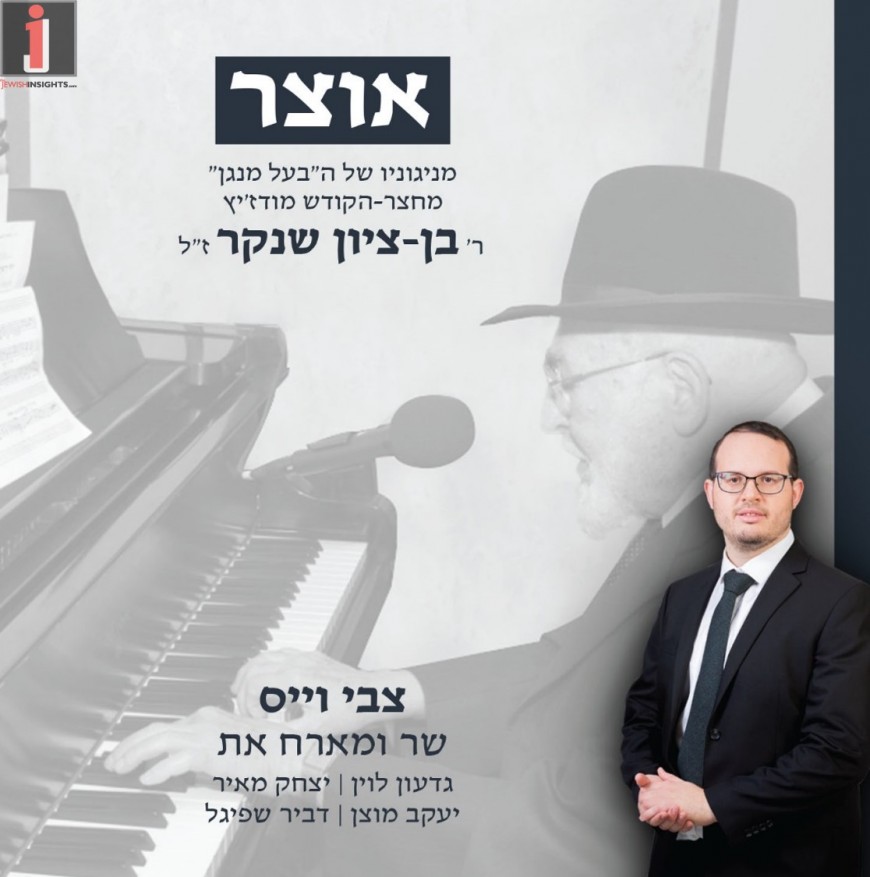
Reb Ben-tzion Shenker Z”L, the Baal-Menagen at the holy Chassidut of Modzitz passed away a few months ago, leaving behind many tunes and nigunim; well-known examples include Eshes Chayil, Mizmor LeDavid, La’Yehudim, Hamavdil, and Yossis.
Otzar is the name of a new project that aims to preserve and publish those nigunim that have been published so far, if at all, in Reb Ben-tzion Shenker‘s immediate surroundings as well as in Modzitz – most of which are not widely known to the public.
The soloist in this special project is Tzvi Weiss, a talented and successful cantor who can simply take a music sheet and sing it. He has collected 11 tunes out of hundreds of thousands from Shenker’s original music sheets – which he received from Shenker’s assistant, Rabbi Avraham Beckenrott.
The album’s special arrangements were composed by Maestro Raymond Goldstein.
Reb Ben-tzion Shenker‘s tunes, Tzvi Weiss‘ soulful singing, and Raymond Goldtstein‘s arrangements form a unique combination that creates this wonderful “Otzar” (treasure) of special and unfamiliar nigunim that will be sung B”H in every shul and Jewish home.
Yehuda Kalman, who initiated and produced this project among others, promises its first Otzar in a series of many more to come from Reb Ben-tzion Shenker‘s collection, which will be released in the future.
Otzar is available now at selected music stores – Distribution: DABRI SHIR.
SHUVI NAFSHI
VEAL YEDEY ZEH


Related Articles

Ani Yishayna ViLibi Er – I Am Sleeping & My Heart Awakes: Shai Baruch Saloma In A Moving Performance of The Stirring Melody
From the nights of the second hakafot on Har HaMor, through the Hallel singing in the Me’arat Hamachpeila, to the

The Kalif Brothers In A Trance Version of “Or Behirut HaDerech” – Ahead of Rosh Hashanah In Uman
Ahead of Rosh Hashanah and the kibbutz with our holy rabbi in Uman, the twin brothers Kalif are launching a

“Achat Sha’alti” By Shmili Abels, Moti Goldman & The Cappella Choir In A Captivating Musical Production For Elul
Rising star Shmili Abels joins Chassidic singer Moti Goldman for a special and emotional musical project, the “Achat Sha’alati” medley.
